


Getting Your Glass Annealing Just Right
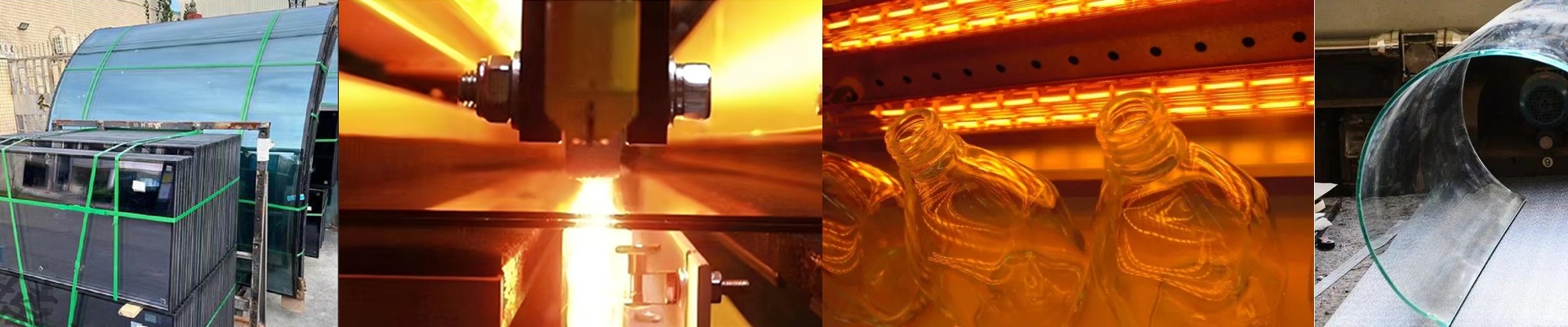
If you’ve ever worked with glass tubes, you know the struggle. You need that perfect thermal gradient to get rid of internal stress, but if you mess up, the whole piece just warps. It’s a delicate balance. That’s why we use short-wave infrared lamps. These aren’t your typical hardware store bulbs. We build these specifically to punch through the surface of the glass and heat the core fast.
The Nitty-Gritty of Power
When we’re picking a lamp, we look closely at the wattage-to-length ratio. It’s all about heat density. If you pack a lot of wattage into a short tube, you get a much faster ramp-up. But here’s the thing: you have to watch your voltage and current. If you go with a high-current, low-voltage setup, your lead wires can actually start to overheat. It’s a mess. By bumping up the voltage, we can push more power through the filament without needing cables as thick as your thumb.
Quartz, Coatings, and Connections
We use high-purity quartz for the envelopes. Why? Because these things go through a lot of thermal shock every time they cycle on and off. Depending on what kind of glass you’re running, we might add a special coating to the tube. This shifts the emission spectrum so the energy actually sinks into the glass instead of just bouncing off the surface. For the connectors, we stick with R7s or Sk15. They click in tight. You don’t want your heat source wiggling loose just because your conveyor belt has a bit of a shake to it.
Why We Come to You
Honestly? Buying a lamp based on a PDF datasheet is a gamble. Your factory has its own quirks. Maybe there’s a draft from a loading dock or your glass tubes have a weird wall thickness. All of that changes how the heat behaves. That’s why we prefer to get on your floor and run a thermal profile. We find the cold spots. A 2000W lamp might look perfect on a piece of paper, but if your cooling fans are blowing too hard, you’ll never actually hit that annealing point. We’ll tweak the spacing and the pulse timing until it’s dialed in. You end up with a system that actually does the job, rather than just a box of expensive parts that don’t quite work.