


Stop Guessing With Your Glass: Why Lamp Consistency Actually Matters
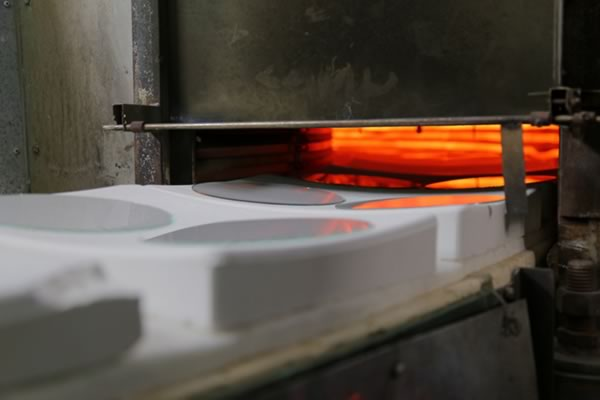
Ever feel like you’re fighting your own oven? You run a batch of glass through annealing, and everything looks great. Then the next batch comes out with random internal stress or, worse, it just shatters for no apparent reason. It’s frustrating. You start messing with the timers or slowing down the conveyor, hoping to find that “sweet spot,” but the results keep swinging. Here’s the thing: the problem usually isn’t your settings. It’s your lamps.
The “Invisible” Gap
Most people assume that if two lamps have the same rating on the box, they’re doing the same job. But in the real world, that’s rarely true. Imagine Lamp A is pushing out 1000W, but Lamp B is lagging at 920W. On paper, they’re the same. In your oven, they’re creating “cold spots.” Your glass isn’t hitting that annealing point at the same time, which is exactly how you get those unpredictable breakage rates. To fix this, you have to get obsessive about the build. We’re talking about the exact way the tungsten filament is wound and how pure the quartz is. When the wattage is tight across the whole array, the heat is even. No surprises. Just smooth, uniform warmth.
A Word of Caution
Now, don’t think that just cranking up the wattage is a magic fix to speed up your cycle times. If you pack a ton of power into a small space to move faster, you’re putting a lot of stress on your sockets and wiring. It gets hot. Really hot. If you go this route, make sure your fans and vents can actually keep up. If you can’t pull that ambient heat away, you’ll end up warping your supports or frying your connectors. It’s a trade-off you need to plan for.
Getting Your Time Back
The best part about using matched-output lamps? You can finally stop chasing your tail. You set your temperature profile once, and it actually stays that way. No more manual tweaks every few hours. No more “hoping” the batch comes out right. It just becomes a repeatable process, and you can finally stop worrying about the oven and get back to the actual work.