


Fixing Those Pesky Cold Spots in Glass Annealing
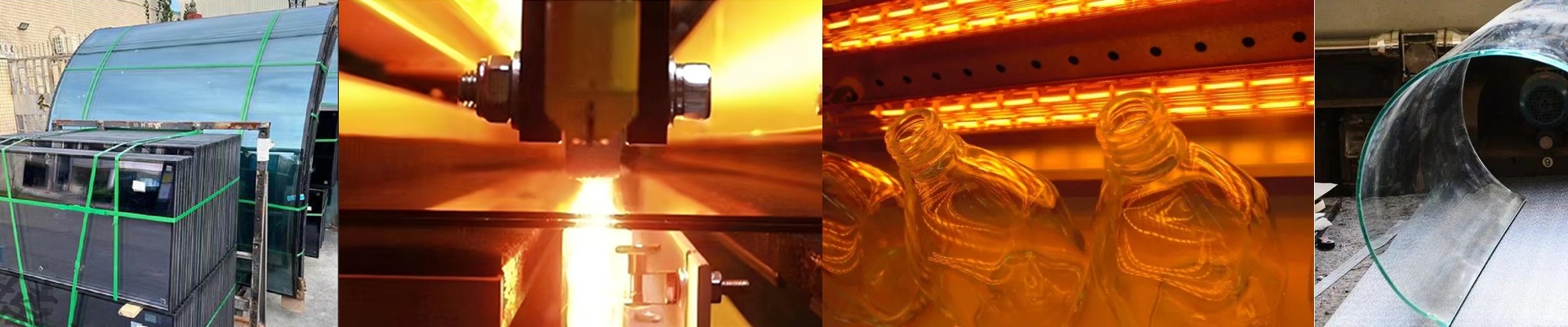
If you’ve ever worked with glass that has a weird shape—think narrow necks, sharp shoulders, or those heavy bases—you know the struggle. They cool unevenly. In a standard annealing lehr, you end up with these “thermal dead zones” where the glass just doesn’t get hot enough. That’s where internal stress gets trapped, and that’s usually where the glass breaks. To fix this, we use shortwave infrared (IR) heating lamps. Instead of just hoping the air is hot enough, we aim these lamps directly at the problem areas to make sure every single inch of the piece hits the right temperature. Getting the heat where it actually matters We don’t mess around with the wattage here. We use lamps with a high wattage-to-length ratio because you need to force heat deep into the thickest parts of the glass. Since we use quartz envelopes and halogen-filled filaments, the heat doesn’t just float around in the air. It actually penetrates the glass surface. If your line is moving fast, you need that kind of punch. Otherwise, the bottle is gone before the heat even registers. Dealing with awkward shapes Let’s be honest: a standard heater can’t “wrap” around a bottle. It’s just a box. That’s why we use linear quartz tubes with R7s or SK15 connectors. They’re flexible. You can wire them in staggered banks or even circle them around the bottle. This kills the “shadows” that the bottle’s own shape creates. Plus, the quartz glass keeps the filament from burning out when things get intense. We often use coated versions to make sure the energy hits the glass, not the furnace walls. The trade-offs (because nothing is perfect) Here’s the catch: high-output IR lamps put out a massive amount of heat. Sure, they kill the cold spots, but they can absolutely fry your conveyor belt or warp your furnace housing if you aren’t careful. You’ve got to be smart about your cooling fans and heat shields. If you don’t have a solid heat sink, your lamp sockets will degrade and fail way sooner than they should. And for heaven’s sake, use high-temp wiring. Nobody wants to deal with melted insulation in the middle of a shift.