


Fixing Those Annoying Cold Spots in Glass Annealing
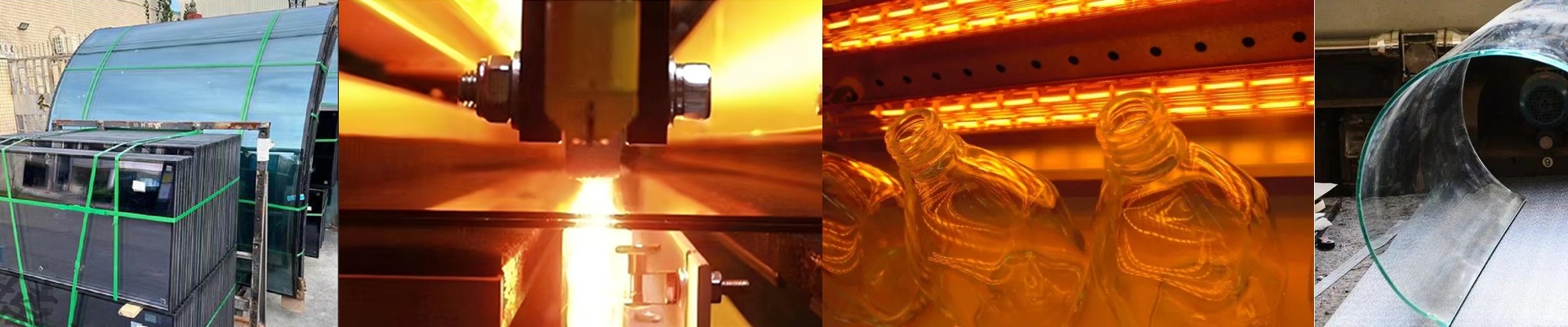
If you’ve ever worked with complex scientific glass—think weirdly shaped flasks, condensers, or custom bulbs—you know the headache of the “dead zone.” You put your piece in the kiln, you wait, and you hope it’s heating evenly. But standard heaters often miss those tricky spots. The glass doesn’t hit the right temperature, internal stress builds up, and then—crack—your hard work shatters for no apparent reason. It’s frustrating. That’s why we use short-wave infrared (IR) lamps. Instead of just heating the air, they shoot radiant energy straight into the glass.
Getting Around Weird Shapes
Most heaters rely on convection, which is basically just moving hot air around. The problem? Air is lazy. It doesn’t like to flow into a narrow neck or deep inside a vessel. IR is different. It moves in straight lines. This means we can actually “wrap” the heat around the glass. By angling the lamps, you can hit the dips and the curves exactly where they need it. No more guessing if the center of that bulb is actually hot enough to keep it from breaking.
The Gear Part
We usually go with high-purity quartz envelopes for these lamps because they can take the heat cycle without giving up. Depending on how your kiln is built, you’ll probably want either R7s or SK15 connectors. The R7s is a simple push-in fit, so it’s usually the easiest way to swap out your old setup without a huge project. One thing to watch:**match your wattage and voltage to your grid.**If you don’t, you’ll burn them out fast. Also, be careful with the power. These lamps pack a punch. If you blast a small area with too much energy, you’ll end up with “hot spots” that can actually warp the glass. You’ll want to tune your PID controller to handle how fast these lamps react.
The Trade-off
Here’s the thing: IR is fast. Like, really fast. It beats ceramic heaters any day when it comes to speed, but that speed can be a double-edged sword. If your sensors are in the wrong spot, your temperature swings can get aggressive. Plus, all that heat has to go somewhere. Make sure your cooling fans are up to the task of clearing out the ambient heat inside the housing. If you don’t, you might just fry your wiring.