


Stop Replacing Your IR Heaters Every Few Months
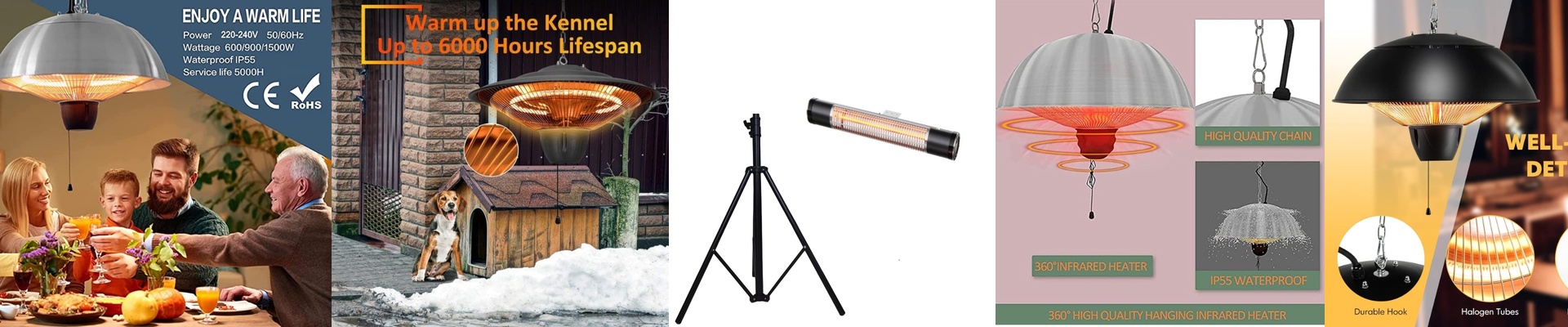
Here is the honest truth: most infrared heaters don’t just “die.” They get murdered by dust and moisture. It usually happens like this: a bit of conductive dust settles on the quartz envelope, or a few stray water droplets hit the glass. When that happens to an element that’s screaming hot, you get these nasty localized hotspots. That’s when the glass cracks or the electronics short out. It’s a headache nobody needs. To fix this, we started building our best-selling IR heaters to IP65 standards. What does that actually mean for you? Basically, it means the unit is dust-tight and can handle a decent spray of water without breaking a sweat. We use precision gaskets and a reinforced housing to keep the gunk out. The real win here is avoiding “thermal shock.” Imagine cold water hitting a tube that’s 500°C. It’s violent. By blocking those splashes and fog, we keep the quartz tube stable and stop the filament from burning out because of wild temperature swings. The honest trade-off Now, look—nothing is perfect. We use high-purity quartz and specialized seals so you can just drop these into wet environments and forget about them. But there’s a catch. Because the element is tucked inside a protective housing, you lose a tiny bit of that direct IR radiation. It’s not a dealbreaker, but you might notice it. You can easily fix this by bumping up the wattage or letting your parts dwell under the heat for a few seconds longer. Where this actually matters If you’re working in food processing or chemical drying, you know the drill. Steam everywhere. Constant wash-downs. It’s a brutal environment. Instead of swapping out elements every few months because of corrosion, the IP65 seal keeps the internals bone-dry. Just wire it into your current controller, make sure the seals are seated tight, and let it take a beating. One quick tip: just double-check that your ventilation can handle the extra casing. You don’t want the chassis overheating because the air has nowhere to go.