


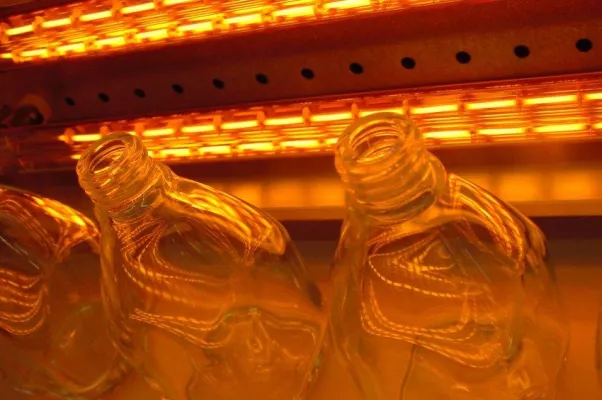
A Smarter Way to Handle Safety Glass Annealing
Let’s be honest: traditional annealing ovens are energy hogs. They spend half their time just heating up the air in the chamber before the glass even feels a thing. It’s a waste of power and a waste of time. That’s why we use shortwave infrared (IR) lamps. Instead of warming up the whole room, these lamps hit the glass surface directly. It’s faster. It’s cleaner. And it’ll actually show up as a win on your electricity bill at the end of the year.
How the heat actually works
Here’s the thing about shortwave IR: it doesn’t care about the air around it. It uses radiation, meaning the heat jumps straight to the glass the moment you flip the switch. In a cutting and annealing line, this is a huge deal. You get faster cycle times and a much more consistent temperature across the pane. When the heat is that precise, you get rid of those nasty internal stresses that cause glass to spontaneously shatter. No one wants that phone call from a customer.
Getting the hardware right
We build these lamps to take a beating. They handle high-density heat without breaking a sweat. Depending on how fast your line moves, we’ll dial in the wattage and voltage so it fits right into your existing power grid. We use quartz envelopes because they don’t warp when things get scorching hot. Plus, we know you don’t want to spend a weekend redesigning your mounting brackets. We offer plenty of connector options—like R7s or SK15 bases—so you can just swap out your old heaters and get back to work.
The “Catch” (and how to handle it)
Now, there is a trade-off. High-wattage IR lamps put out a massive amount of heat, which is great for your throughput, but it’s tough on your reflectors. If your reflectors are dusty or pitted, you’re basically throwing energy at the oven walls instead of the glass. Keep them polished. It’s a small chore, but it’s the only way to keep those energy savings real. One last tip: make sure your PID controllers are tuned for the speed of IR. These lamps react almost instantly. If your settings are too slow, you might overshoot your target temperature and ruin a whole batch of glass. Keep it tight, and you’re golden.